
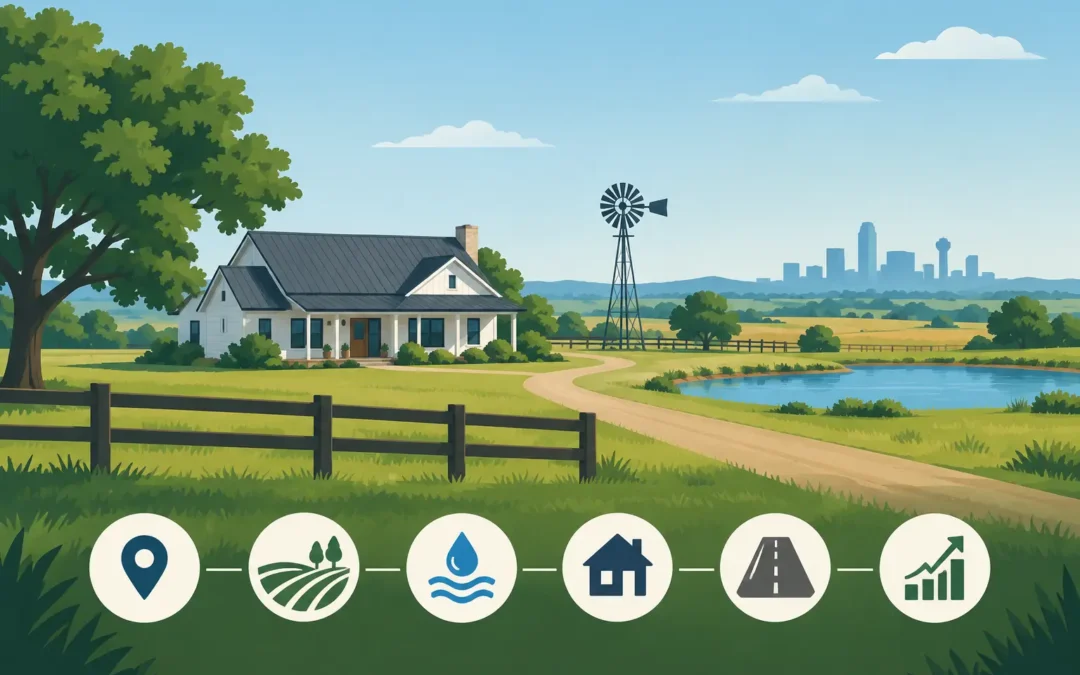
A ranch can have a handsome entry gate, a new fence line, and wide-open views, yet still bring less than a nearby property with a dependable water source and all-weather road access. That is the reality behind what affects rural property value: acreage is only the starting point. In North Texas, buyers pay for land that fits the way they actually plan to live, work, ride, raise livestock, or build a future.
A fair value comes from comparing a property to recent sales, but no two rural tracts are truly identical. The details that look ordinary on a listing can have a major effect on usefulness, financing, upkeep, and buyer demand. Understanding those details helps sellers prepare with confidence and helps buyers recognize when a property is priced for its real potential.
What Affects Rural Property Value Most?
Location and the drive from town
Location is more than the county on the listing. Buyers often weigh how long it takes to reach Stephenville, Ranger, schools, feed stores, veterinary services, employers, and major roads. A place that offers quiet country living but remains practical for weekday errands can command stronger demand than a comparable tract much farther from services.
Road quality matters just as much as distance. Paved frontage is attractive, but a well-maintained county road can also be a strong asset. Buyers will notice whether a road stays passable after heavy rain, whether trailers can enter safely, and whether the approach creates concerns for horses, cattle, equipment, or guests.
Proximity can bring trade-offs. Land near a growing community may appeal to buyers who want convenience and future flexibility, but it may not suit someone looking for complete privacy, dark skies, or room to train horses without nearby development. Value depends on the likely buyer, not a one-size-fits-all rule.
Water is often a deciding feature
In rural North Texas, dependable water can change the entire conversation. A working water well, reliable rural water service, stock tanks, creeks, and seasonal draws all deserve a close look. The value is not simply that water exists on the map. Buyers want to know whether it is usable, accessible, dependable, and adequate for the property’s intended use.
For a livestock operation, water placement matters. A pond in one far corner of a large pasture may be less useful than water that serves multiple grazing areas. For a home site, the condition, production, and water quality of a well can affect both confidence and cost. If a seller has well records, water test information, or details on rural water availability, those documents can help answer questions before they slow down a transaction.
Water features also require honest evaluation. A scenic creek may add appeal, while a flood-prone area can limit building sites, insurance options, or everyday access. Good marketing explains both the benefit and the practical context.
Usable acreage, soil, and terrain
Two properties with the same number of acres may serve very different purposes. Level, open ground can support hay production, grazing, riding, building, or an arena more easily than heavily wooded, steep, or rocky terrain. That does not mean one landscape is always worth more. Mature trees, elevation changes, and wildlife habitat can be exactly what a recreational buyer wants.
The key is usable acreage. Buyers should consider how much ground can realistically be fenced, grazed, driven across, built on, or maintained. Soil quality can influence pasture health, crop potential, drainage, septic planning, and the cost of building improvements. Native grass, improved pasture, productive bottomland, and heavy brush all create different value stories.
For horse and rodeo families, ground conditions have a practical impact. Space for turnouts, a practice pen, trailer parking, and safe access between the barn and arena can be more valuable than acreage that is difficult to use. A property does not have to be a large ranch to be highly functional, but it needs a layout that works.
Improvements That Add Value – and Those That Need Careful Pricing
A well-built home, barn, shop, pipe fencing, cattle working pens, and equipment storage can make a rural property more marketable. Improvements save a buyer time and upfront expense, especially when they are in good condition and suited to the land. A covered arena or horse barn can be a significant asset for the right audience, particularly when footing, drainage, lighting, stalls, tack storage, and trailer access are all thoughtfully planned.
Still, improvements do not always return their full construction cost. A highly customized facility may have a smaller buyer pool than a flexible barn or shop. An older home with solid bones may be an opportunity for one buyer and a renovation project for another. Sellers are usually better served by pricing improvements based on local buyer demand and condition, rather than assuming every dollar spent must be recovered.
Deferred maintenance can affect value quickly. Aging roofs, outdated electrical systems, failing septic systems, poor drainage around structures, damaged fencing, and neglected outbuildings can raise questions that lead buyers to reduce their offers. Before listing, addressing straightforward repairs and gathering records for larger systems can make the property easier to evaluate.
Access, utilities, and legal details
A beautiful property can lose appeal if the access is uncertain. Recorded easements, shared drives, gate agreements, and maintenance responsibilities should be understood early. Buyers need to know they can reach the property legally and reliably, including with a horse trailer, livestock truck, or construction equipment when needed.
Electric service, internet options, septic capacity, propane, and cell coverage also influence day-to-day value. These details are especially important for buyers relocating from town or working remotely from a rural home. Availability is not the same as affordability, so the distance to utilities and the likely cost of extension can matter.
Deed restrictions, zoning or local regulations, ag exemptions, and mineral ownership can also affect the property’s appeal. Agricultural valuation may lower annual property taxes, but buyers should understand the requirements for maintaining it. Mineral rights and surface-use provisions deserve careful review because they can shape future use and buyer comfort. These issues are not reasons to walk away automatically, but they should be clear before price expectations are set.
Demand and Highest Use in the Local Market
Rural value is tied to what buyers in a specific area are seeking right now. In one part of North Texas, small acreage with a newer home may draw strong interest from families who want room for animals without a long commute. In another, buyers may be focused on cattle ground, recreational hunting, equestrian facilities, or a ranch home close to rodeo activity and events.
The property’s highest and best use helps frame the price. A tract with road frontage near growth may carry different potential than a secluded ranch used primarily for grazing and recreation. At the same time, future potential should be handled carefully. A seller should not price land as a commercial or residential development simply because growth could arrive someday. Current access, infrastructure, restrictions, market demand, and realistic timing all matter.
Recent comparable sales are essential, but the right comparisons go beyond price per acre. A smaller tract can sell for more per acre than a large ranch because homesites, utilities, and location are spread across fewer acres. A larger property may bring a lower per-acre figure while carrying a higher overall price. Comparing like with like is where local experience makes a meaningful difference.
How Sellers Can Prepare for a Stronger Value Conversation
The best first step is to see the property through a buyer’s eyes. Clear brush away from entrances, repair obvious fence issues, make gates easy to operate, and clean up around barns, shops, and water features. These are not cosmetic tricks. They help buyers inspect the property and understand how it functions.
Sellers should also gather the records that support the story of the land: surveys, well information, utility details, septic records, tax information, improvement lists, leases, and documentation for any agricultural use. If there are known challenges, such as a shared road or floodplain area, straightforward information builds more trust than leaving buyers to discover it later.
For buyers, the same lesson applies: do not judge rural land by the view alone. Walk the terrain, check access after weather when possible, understand water and utility options, and match the property to the work or lifestyle it needs to support. The right acreage is not just land you can afford. It is land that can do the job you need it to do.
Whether you are selling a working ranch, a horse property, or a few acres for a country home, a thoughtful local evaluation can bring the property’s real strengths into focus. South Gate Realty can help turn those details into a clear, practical plan for your next move.