
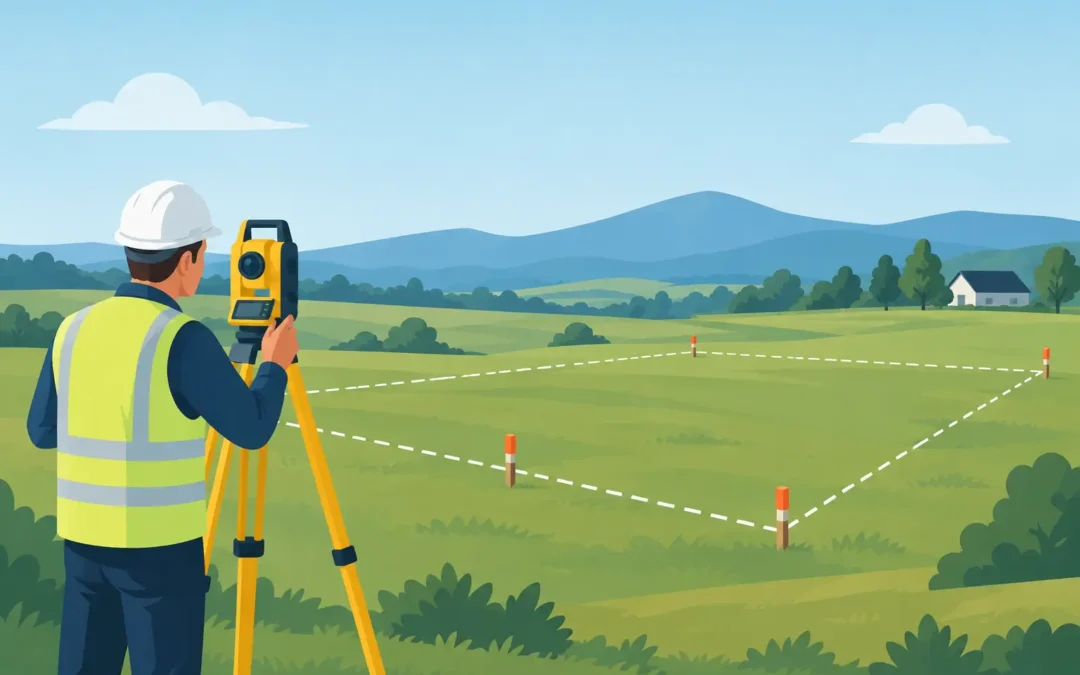
A fence line can look settled for generations and still sit several feet inside the neighboring tract. A driveway may cross land you do not own. That pond, arena, or cattle pen you pictured using could be outside the legal boundaries shown in the deed. So, does acreage require a survey? Not in every transaction, but for most North Texas land buyers, getting a current survey is one of the smartest ways to protect the purchase.
A survey is not just another closing document. On rural property, it is often the clearest answer to a basic question: what, exactly, are you buying?
Does Acreage Require a Survey in Texas?
Texas law does not automatically require a new survey every time acreage changes hands. A cash buyer may decide to purchase land without one, and some transactions can use an existing survey if it is acceptable to the buyer, title company, lender, and seller.
That said, lenders and title companies commonly require a survey before closing, especially when a home, barn, shop, driveway, or other improvements are involved. Even when no one requires it, acreage buyers should think carefully before waiving one. The larger and more rural the tract, the more room there is for uncertainty about corners, access, easements, fences, and improvements.
A survey is prepared by a licensed professional land surveyor. It identifies the property’s boundary lines, dimensions, acreage, easements, rights-of-way, visible improvements, and possible encroachments. It gives a buyer, seller, lender, and title company a shared picture of the land being transferred.
For a small city lot with clear records and no recent changes, an older survey may be enough. For a 20-acre horse property, a 100-acre cattle place, or a tract being divided from a family ranch, the stakes are usually much higher.
Why a Survey Matters More on Rural Acreage
On acreage, property lines are rarely as obvious as they seem. Old barbed-wire fences, tree rows, creek beds, and gravel roads can suggest a boundary, but none of them proves one. Fences are often built for livestock management, not legal accuracy. A neighbor may have agreed years ago to maintain a fence in a convenient location without meaning to change ownership.
That matters when you plan to build a riding arena, add pipe fencing, put up a barn, install a water well, or create a home site. A structure placed over a boundary line can lead to expensive changes, difficult neighbor conversations, or a title issue when you eventually sell.
Access is another major concern. Some acreage has direct frontage on a county or state road. Other tracts rely on an easement across another property. A survey can show whether the recorded access matches the driveway everyone has been using. If you haul horses, trailers, hay, or equipment, practical access is not a minor detail. You need room to get in and out safely, legally, and in all seasons.
The same goes for utilities. Electric lines, pipelines, drainage areas, and road rights-of-way may limit where you can build. A survey will not replace a full review of deed restrictions, flood conditions, utility availability, or land-use rules, but it is a key part of understanding the property’s usable ground.
When You May Be Able to Use an Existing Survey
A seller may have a prior survey from when they purchased the property. Using it can save money and time, but it should never be assumed acceptable simply because it exists.
An existing survey has the best chance of being useful when it is relatively recent, clearly matches the legal description in the current deed, includes the improvements still standing, and shows no obvious changes to fences, buildings, roads, or adjoining ownership. The title company and lender must also approve it.
In many cases, the seller will sign a survey affidavit confirming that no changes have been made since the survey was completed. If a new shop, arena, guest house, fence, driveway, or neighboring improvement has appeared since then, the old survey may no longer tell the full story.
Buyers should also look beyond the survey date. A survey can be only a few years old but still be unsuitable if the property was split, combined with another tract, or altered in a meaningful way. If there is any question about whether the document reflects the land today, ordering a new survey is usually the safer call.
Situations Where a New Survey Is Worth It
A new survey is especially wise when boundaries are unclear, acreage is being carved out of a larger tract, or the property has visible improvements near a fence line. It is also valuable when the listing description says “approximately” a certain number of acres. Approximate acreage may be perfectly normal in marketing, but buyers should know the surveyed acreage before relying on it for value, grazing capacity, or future plans.
Consider a new survey if the property includes any of the following:
- A shared driveway, private road, or access through neighboring land
- A barn, home, arena, shed, fence, or corral close to a boundary
- A creek, lake, pipeline, transmission line, or utility corridor
- Recently divided acreage or a family tract with older deed descriptions
- A disagreement between neighbors about where a line, gate, or road belongs
These conditions do not mean there is a problem. They mean the property deserves a closer look before money changes hands.
What a Survey Does Not Tell You
A survey is powerful, but it is not a complete property inspection. It will not tell you whether a septic system works, whether a well produces enough water, whether soil will support an arena, or whether a barn meets your needs. It also does not guarantee zoning, exemption status, mineral ownership, or the ability to use the property for a specific business or event.
For ranch and rodeo buyers, this distinction matters. A survey may confirm that an arena is inside the boundary, but you still need to evaluate footing, drainage, lighting, trailer parking, water supply, and access for large rigs. A survey may show a pond, but it does not confirm its depth, condition, or water rights.
Think of it as one part of a practical due-diligence plan. The goal is to make sure the land works legally and physically for the life you want to build there.
Who Usually Pays for the Survey?
Survey costs are negotiable. In many Texas transactions, the seller provides an existing survey or pays for a new one if needed. In other deals, the buyer pays, particularly when the buyer wants a new survey for added confidence or when the lender requires an updated document.
The answer often depends on local custom, the contract terms, the age and condition of any existing survey, and the bargaining position of both parties. On a competitive listing, a buyer may choose to accept an existing survey if the title company and lender allow it. On a complicated acreage deal, requesting a new survey can be a reasonable and responsible contract term.
A qualified real estate agent can help you discuss the survey requirement early, rather than discovering a problem days before closing. South Gate Realty works with North Texas buyers who need to look beyond the front gate and consider how land will function for livestock, horses, family life, and long-term ownership.
Questions to Ask Before You Waive a Survey
Before deciding not to order a survey, ask whether you know where every boundary begins and ends, whether the driveway and utilities are properly documented, and whether every visible improvement sits where it should. Ask whether the acreage in the listing matches the deed and whether a title company will insure the property without a current survey.
It is also worth asking what you would do if the answer turns out to be no. If moving a fence, adjusting a planned build site, or losing part of the expected acreage would change your decision, a survey is not a place to cut corners.
Acreage is often purchased for freedom, privacy, and room to make the property your own. A current survey helps make sure that room is truly yours before the first fence post goes in the ground.