
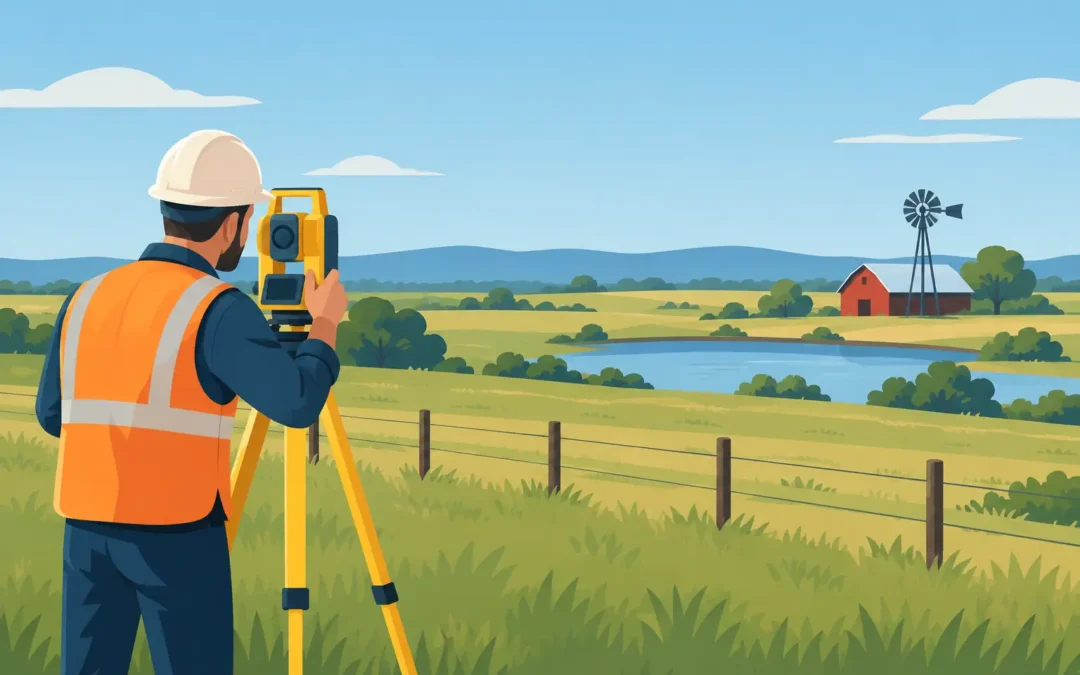
A pretty gate, good grass, and a well-built arena can make a rural property feel like the right place the moment you pull in. But before you plan where the horses will go or picture a new home site, make sure you know exactly what you are buying. This guide to rural property surveys explains what a survey can tell you, what it cannot, and why it deserves close attention before closing on North Texas acreage.
A survey is more than a drawing attached to a closing file. It is a professional measurement and map of the property prepared by a licensed land surveyor. For buyers of farms, ranches, horse properties, and rural homes, it can reveal issues that are easy to miss during a showing and expensive to address later.
Why Rural Property Surveys Matter
On a city lot, property lines may be relatively simple. On rural land, boundaries can follow old fence lines, creek beds, county roads, metes-and-bounds descriptions, or corners established decades ago. A tract advertised as 20 acres may be close to that figure, but the survey is where the legal acreage and boundary information become clearer.
That distinction matters when every usable acre has a purpose. A few acres can affect grazing capacity, hay production, a future barn location, a roping arena, or the room needed for turnout pens and trailer access. A survey also helps identify whether a neighbor’s fence, shed, driveway, or livestock pen crosses onto the property – or whether your intended improvements could cross onto theirs.
For a working ranch or rodeo-ready property, practical access matters just as much as acreage. Can a truck and stock trailer reach the arena, barn, or back pasture without crossing someone else’s land? Is the entrance actually within the tract’s boundaries? These are questions worth answering before the property changes hands.
What a Rural Property Survey Shows
A current survey generally identifies the boundary lines, corners, dimensions, total acreage, visible improvements, and apparent easements affecting the tract. It is often reviewed alongside the title commitment, which lists recorded matters that may affect ownership or use.
The surveyor may locate homes, barns, shops, pools, fences, roads, driveways, water wells, and other visible features. If a structure sits close to a boundary, that detail deserves a careful look. Setback requirements, financing requirements, and future expansion plans can all be affected by its location.
Boundary Lines Are Not the Same as Fence Lines
In North Texas, a fence may have been in place longer than anyone can remember. That does not automatically make it the legal property line. Fences are useful visual clues, but they can be built inside a boundary, outside a boundary, or simply where the terrain made sense at the time.
Never assume that a fence tells the full story. If the survey shows a difference between the fence and the actual line, ask questions before closing. The answer may be straightforward, or it may point to an encroachment, a boundary agreement, or a conversation that needs to happen with the neighboring owner.
Easements Can Affect How You Use the Land
An easement gives another party certain rights to use part of a property. Common examples include utility easements, pipeline easements, road easements, and access easements for neighboring landowners. Some are minor and expected. Others may significantly affect where you can build, fence, plant trees, or place an arena.
For example, a utility easement running along a frontage road may have little effect on daily ranch life. A wide pipeline easement through a proposed home site or riding area may require a different plan. The survey shows where easements appear to lie, while the title documents help explain the rights connected to them.
Access Must Be Clear, Not Assumed
A tract can look accessible from a public road and still have a question worth resolving. Some rural properties rely on recorded ingress and egress easements, shared private roads, or long-established routes across neighboring land. A survey can help show the route, but the title work should confirm the legal right of access.
This is especially important for landlocked parcels, remote hunting land, and split tracts. If you plan to haul horses, cattle, equipment, or building materials, evaluate the road width, gates, turns, surface condition, and maintenance responsibility as well. Legal access and practical access are related, but they are not always the same thing.
New Survey or Existing Survey?
A seller may provide an existing survey, and in some transactions it may be acceptable to the title company and lender. That can save time and money. Still, an older survey may not reflect a new shop, fencing, driveway, pond, utility line, or boundary concern that has developed since it was completed.
A new survey is often the better choice when the existing document is old, unclear, incomplete, or inconsistent with what you see on the ground. It is also worth considering when the property has changed hands several times, has multiple tracts, includes recent improvements, or contains valuable features near the boundaries.
The right decision depends on the age and quality of the prior survey, lender requirements, title company requirements, and the specifics of the property. Ask early in the contract period. Survey scheduling can take time, particularly during busy seasons, and waiting too long can put pressure on your due diligence timeline.
A Practical Review Before You Close
When you receive the survey, do not just file it away with the closing paperwork. Compare it to the listing, your contract, the title commitment, and what you observed during your visit. If something does not match, raise the question while there is still time to investigate.
Pay particular attention to these common rural property concerns:
- The surveyed acreage differs from the acreage advertised or expected.
- A barn, home, fence, driveway, or arena appears near or over a boundary line.
- A neighboring road, gate, or driveway crosses the property.
- An easement affects the place where you planned to build or improve.
- The survey identifies gaps, overlaps, or irregular boundaries between adjoining tracts.
- A shared entrance or private road has unclear ownership or maintenance obligations.
Not every item is a deal breaker. A small utility easement may be routine. A fence that misses the line by a few feet may have a practical solution. But a survey issue should be understood, documented, and addressed with the right professionals before you take ownership.
Questions to Ask Your Agent and Title Team
Start with the basics: Does the survey match the legal description in the contract and title commitment? Are there visible encroachments? Are all recorded easements shown or referenced? Is there confirmed legal access from a public road?
Then bring the questions back to your plans for the land. If you want to build a covered arena, add an RV hookup, put in a second home, divide the tract, or establish new pasture fencing, ask whether the survey reveals anything that could affect that work. A survey does not replace a conversation with a lender, attorney, contractor, county office, or land-use professional when one is needed, but it gives those conversations a much stronger starting point.
It is also wise to remember what a survey does not answer. It does not guarantee water production, soil quality, mineral ownership, flood risk, septic suitability, deed restrictions, or the condition of a well. Those items may require separate inspections, records, reports, and professional advice. Rural due diligence works best when each piece of information is reviewed together rather than in isolation.
Survey Planning for Ranch and Horse Properties
For buyers who need a functional place for horses, cattle, or rodeo training, look beyond the lines themselves. Use the survey to think through traffic flow from the road to the barn, trailer turnaround space, safe separation between livestock areas and public access, and the room needed for future improvements.
A property may have enough total acreage on paper but limited usable space because of easements, terrain, floodplain areas, wooded draws, or an awkwardly shaped boundary. That does not make it the wrong property. It simply means the layout should fit the way you actually live, train, work, and haul.
South Gate Realty helps North Texas buyers evaluate acreage with the real-world questions in mind, from access and improvements to the space needed for a home base that works for your family and your livestock. The right tract should give you confidence at the gate and clarity all the way to the back fence line.