
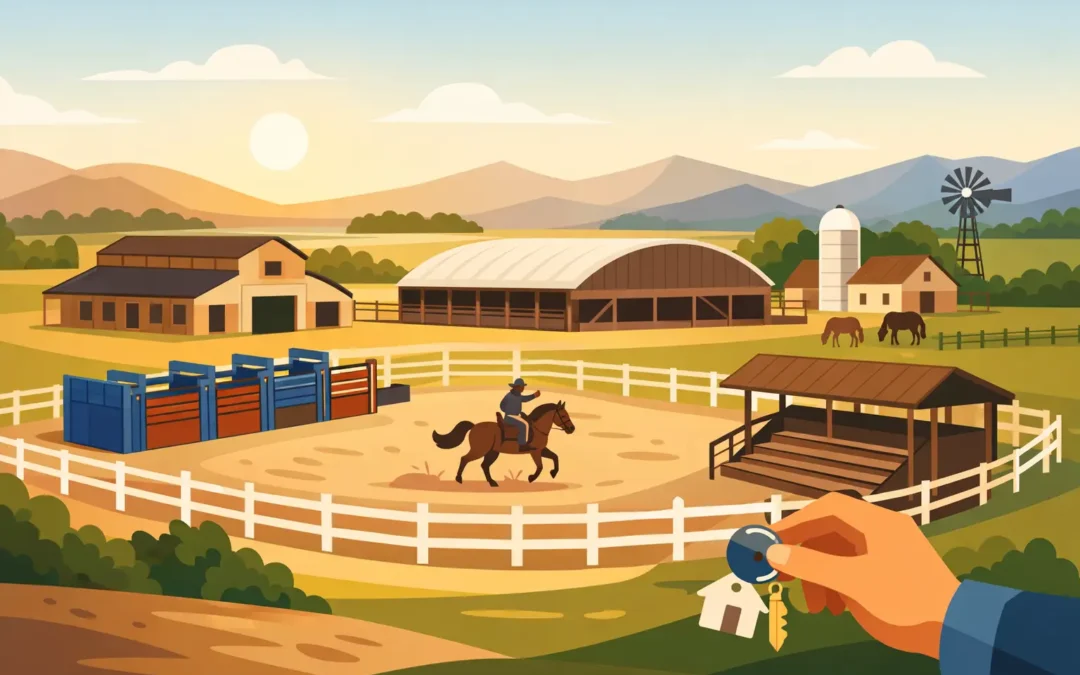
A rodeo training facility property for sale is not just acreage with an arena behind the house. For a competitor, trainer, or rodeo family, it is the place where horses are conditioned, stock is handled, runs are sharpened, equipment is stored, and the next opportunity is built one practice at a time.
In North Texas, the right property can support a serious program while still giving your family room to live well. The wrong property can create daily headaches: poor arena footing, limited trailer access, inadequate water, restrictive deed rules, or a layout that turns routine chores into extra work. Before you fall for the view or the house, make sure the working side of the property fits the way you train.
What a Rodeo Training Facility Must Do
Every discipline has different needs. A team roper may prioritize a covered arena, a quality return alley, dependable cattle flow, and room to park several rigs. A barrel racer may need a consistent riding surface, ample turnout, safe fencing, and an arena layout that allows for regular pattern work. A trainer may need all of that, plus stalls, a tack room, client parking, and a setup that keeps the home private from daily barn traffic.
The first question is not, “How many acres do I need?” It is, “What needs to happen here every week?” Think about your actual routine: early rides, hauling in cattle, feeding, shoeing, turnout, lessons, practice nights, and loading before a weekend run. A property should reduce friction in that routine, not add it.
A few usable acres with strong improvements can serve a competitive household better than a larger tract with no arena, weak fencing, or difficult access. On the other hand, bare land may be the better buy if the location, soil, utilities, and layout give you a clean path to build exactly what your program needs.
Start With the Arena, Not the Living Room
The arena is often the most valuable improvement on a rodeo-ready property, but only when it is functional. Size matters, especially for roping, but it is not the whole story. Look at the footing depth and composition, drainage, fencing, lighting, gates, alleyways, cattle pens, and the amount of room around the arena for safe movement.
Covered arenas offer dependable practice during North Texas heat, rain, and wind. They can be a major advantage for year-round training, but they also come with maintenance, insurance, and construction-quality considerations. Inspect the roof, support structure, electrical system, lighting, and drainage around the building. If an arena has been sitting unused, ask what work it will need before it is ready for regular riding.
Outdoor arenas can be excellent when they are built with good base material, proper slope, and a reliable way to manage dust. Pay attention after rain if possible. Standing water, washed-out footing, and drainage channels cutting through the arena are more than cosmetic problems. They can limit training days and become expensive to correct.
For ropers, evaluate the entire cattle and return system, not only the box. Is there a safe, efficient route from the holding pens to the arena? Is the return alley practical? Can cattle be sorted, watered, shaded, and worked without creating bottlenecks? Small design details make a real difference when you are practicing regularly or bringing in friends for a jackpot-style practice.
Evaluate Horse, Livestock, and Equipment Needs
A good facility keeps horses healthy, chores manageable, and equipment protected. Barns and stalls should have safe construction, ventilation, lighting, water access, and room to work around them. Walk each stall, check doors and latches, and look closely at flooring, drainage, electrical outlets, and signs of water damage.
Turnout is just as important as stalls for many horse owners. Consider whether the pens are sized appropriately, whether fencing is safe for horses, and whether there is enough separation for horses that do not live well side by side. Mature trees and shade structures are a plus, but they should not replace a sound plan for water, shelter, and fence maintenance.
If cattle are part of the training setup, ask how many head the property can support and how often outside cattle will be brought in. That answer depends on acreage, grass, rainfall, stocking practices, hay storage, and available water. Do not assume a few extra acres automatically equal year-round grazing. In many cases, hay and feed costs remain part of the operation even on a well-kept place.
Equipment storage deserves a close look. Horse trailers, tractors, drag equipment, panels, hay, feed, and a truck or two take up space quickly. A tall shop or covered equipment area can be a significant advantage, particularly if it has wide doors, a solid approach, and enough turning room for a gooseneck trailer.
The Property Details That Can Change the Deal
A beautiful facility can still be a poor fit if access is difficult. Drive the route from the nearest highway to the gate with a trailer in mind. Narrow county roads, low bridges, sharp turns, weak culverts, and tight entrances can make hauling stressful. Inside the gate, look for an all-weather drive and enough space to turn, back, and park safely.
Water is another nonnegotiable. Confirm the source for the house, barn, troughs, irrigation if applicable, and any planned expansion. A private well may be ideal, but its production, condition, and water quality should be evaluated. Rural water service may offer consistency, though capacity and availability vary by area. Ponds can be useful, but they should not be your only livestock water plan without understanding how they perform in dry conditions.
Utilities, internet service, septic capacity, floodplain location, and road maintenance are easy to overlook when you are focused on the arena. They matter. Reliable internet can be essential for families who work remotely, market a training business, or manage entries and communication from home. Septic systems must be sized for the house and intended use. If you expect frequent events or clients, parking and restroom needs may also become part of the conversation.
Restrictions require careful review. Some properties are governed by deed restrictions or homeowners associations that limit commercial activity, livestock numbers, outside storage, lighting, signs, or arena use. County rules and state regulations may be less restrictive than city limits, but “outside city limits” does not mean there are no rules. Make sure the property supports the use you intend before committing.
Buying an Existing Facility Versus Building One
An existing rodeo facility can save time and let you train sooner, but it should be priced with the condition of its improvements in mind. Older arenas, barns, fences, wells, and electrical systems may need meaningful investment. The right existing setup often has value because the hard work has been done, yet buyers should still budget for updates that match their own discipline and standards.
Building from the ground up gives you control over arena orientation, drainage, barn placement, pens, driveways, and home privacy. It can also take longer and cost more than expected, especially when site work, utilities, fencing, permits, and material prices are factored in. Bare land is a strong option when the location is right and you are prepared for a phased plan rather than immediate full operation.
There is no universal answer. A family looking for a home base before the next season may benefit from a turnkey place. A trainer with a specific business model may be better served by raw acreage that can be designed around client flow and future growth.
Questions to Ask Before You Make an Offer
Before moving forward on a rodeo training facility property for sale, get clear answers about the history and operating costs of the place. Ask the seller how the arena has been used, when major improvements were installed, what repairs have been completed, and what they spend on utilities, maintenance, insurance, feed, and water.
It also helps to ask why the property is being sold and whether any equipment, panels, cattle, or arena drag equipment may be available separately. Those details should never replace inspections and due diligence, but they can give you a more complete picture of how the facility has performed.
A qualified inspection team may include a general home inspector, well professional, septic inspector, electrician, fence contractor, arena specialist, or other experts based on the property. Rural properties have more moving parts than a typical neighborhood home, and a careful evaluation can protect both your investment and your training schedule.
South Gate Realty understands that a rodeo property has to work long after closing day. The best search starts with a practical conversation about your events, horses, livestock, hauling needs, budget, and preferred North Texas communities.
The right place should make it easier to back in the trailer before daylight, practice with confidence, and come home knowing your horses and family are set up for the long haul.