
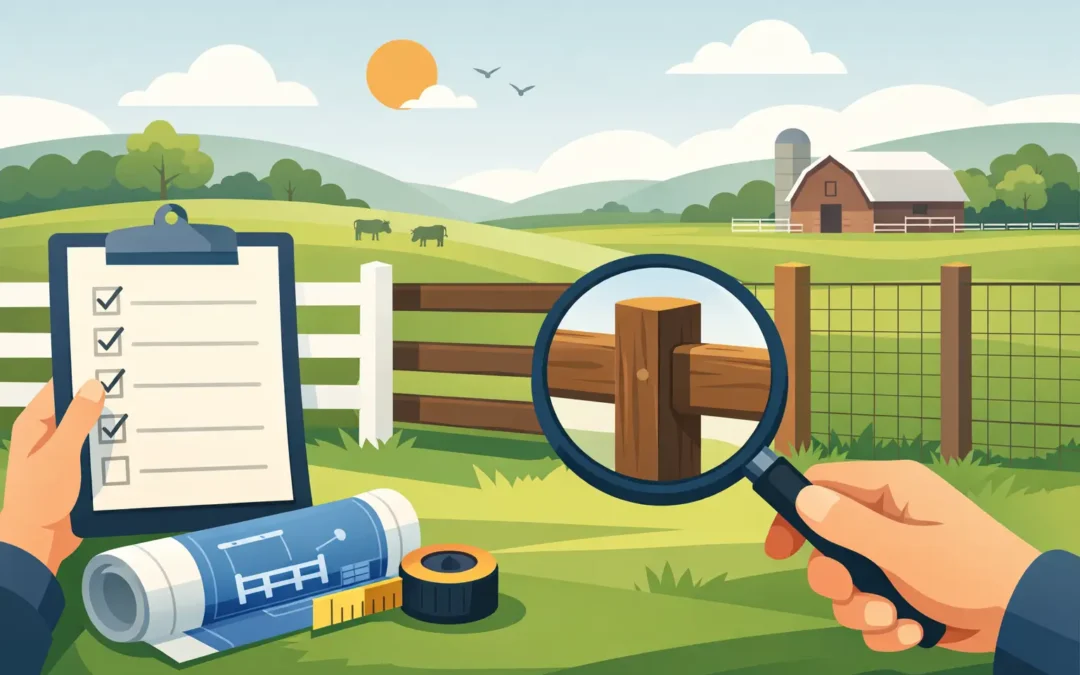
A ranch gate that will not close, a sagging corner post, or a fence line swallowed by brush can tell you more about a property than a fresh coat of paint ever will. Knowing how to evaluate ranch fencing before you buy helps you see whether the acreage is ready for cattle, horses, goats, or a rodeo lifestyle – or whether a major repair bill is waiting after closing.
Fence condition is not just a cosmetic detail. On a North Texas ranch, it affects livestock containment, pasture management, neighbor relationships, insurance considerations, and the daily work required to keep the place running. A few weak stretches may be manageable. A neglected perimeter on a large tract can quickly become one of the first major projects you own.
Start With the Fence’s Job
Before judging materials or appearance, ask what the fence is meant to contain. The right fencing for a small group of cattle is not automatically suitable for high-value horses, weanlings, goats, or a property with an active arena and training setup.
Barbed wire remains common and practical on larger cattle properties. It can cover long distances economically and, when properly stretched and maintained, can serve a working ranch well. But it may not be the best choice around horse traps, riding areas, or smaller turnout spaces where visibility and injury risk deserve more attention.
For horses, pipe, cable, woven wire, no-climb wire, and well-built board fencing may be better fits depending on the use of the pasture. Goats and sheep usually require tighter mesh and closer attention to low gaps. If the property will support several species, look closely at whether the existing fence layout actually separates them safely.
A fence does not have to match your final vision on day one. It does need to be safe enough for the animals you plan to bring home and functional enough that you are not forced into immediate, unplanned improvements.
How to Evaluate Ranch Fencing at the Property
Do not inspect fencing from the truck or rely only on aerial photos. Walk representative sections of every major fence type on the property, especially perimeter boundaries, pasture divisions, creek crossings, road frontage, and areas near working pens. On larger ranches, that may mean using an ATV or UTV with the seller’s permission.
Start at the corners. Corners, H-braces, and gate posts carry the tension of the entire line. A leaning corner, split timber, loose brace wire, or post that moves when pushed can signal a fence that is losing its structure. One bad post is a repair. Repeated weak corners can mean the line needs a more extensive rebuild.
Then look down the fence line. Wire should be reasonably tight for its intended purpose, with no long sagging sections, broken strands, or places where livestock can push underneath. Pay attention to the bottom of the fence as well as the top. Cattle may test a loose wire, while goats and smaller animals will find openings that look insignificant from a distance.
Posts deserve a close look. Steel T-posts are common and can last for years, but bent posts, missing clips, and posts pushed out of alignment can weaken a line. Wood posts should be checked for rot at ground level, insect damage, splitting, and loose footing. Cedar posts often hold up well in Texas conditions, though age, soil moisture, and prior maintenance still matter.
Also check for vegetation pressure. Mesquite, brush, vines, and fallen limbs can pull down wire and make future repairs harder. A clean fence line usually suggests the owner has kept up with routine ranch maintenance. Heavy overgrowth does not always mean the fence is beyond saving, but it adds labor and makes a proper inspection more difficult.
Pay Close Attention to Gates and Access
A good fence is only useful if you can move people, livestock, equipment, and trailers through it without a fight. Open every gate you reasonably can during a showing. Gates should swing freely, latch securely, and provide enough clearance for the equipment you expect to use.
A narrow gate may be fine for a pickup and not nearly wide enough for a stock trailer, hay trailer, or tractor. Consider where gates sit in relation to the road, driveway, pens, barns, and pasture lanes. An awkward gate location can add time and frustration to every feeding run, turnout, or livestock move.
Look for signs of livestock leaning on gates, such as bowed panels, bent hinges, or improvised chains and wire holding everything together. These are common ranch fixes, but they should be factored into your repair plans. Around horse facilities and working pens, sturdy pipe gates and well-supported hinges are often worth the added investment.
Confirm the Boundary Before Calling It Perimeter Fence
One of the most costly assumptions a buyer can make is believing every visible fence marks the legal property line. In rural areas, an old fence may sit inside a boundary, cross onto a neighbor’s land, or reflect an arrangement that made sense decades ago but was never surveyed.
Ask for the existing survey and compare it with the fence lines you see. If there is uncertainty, discuss a new survey with your real estate professional and title team before closing. This matters most along road frontage, shared driveways, irregular tracts, creek bottoms, and properties that have been divided from a larger family ranch.
Also ask who maintains shared fencing. Texas landowners often handle boundary fences through informal neighbor agreements. That can work well when everyone communicates, but it is worth understanding whether a neighbor expects cost-sharing, has livestock that put pressure on the line, or has different ideas about upgrades.
Check Water Crossings, Terrain, and Wildlife Pressure
North Texas weather can be tough on fencing. Heavy rain, flash runoff, dry ground, wind, and shifting soil all take a toll. At creeks, draws, ponds, and low-water crossings, look for washed-out wire, debris caught in the fence, or patches that have been repeatedly repaired. These sections may need a more specialized design to withstand future runoff.
Hilly ground creates its own challenges. Wire should follow the contour closely enough that animals cannot slip beneath it in dips or step over it on rises. Rocky soil can make setting new posts more difficult and expensive, so a damaged line on rough terrain may cost more to fix than the same repair on level pasture.
Wildlife can affect fencing too. Deer crossings, feral hog activity, and cattle pressure near water sources often create weak spots. If you see repeated damage in one location, consider whether the fence design fits the terrain and traffic pattern rather than assuming another quick patch will solve it.
Estimate Repair Costs Honestly
It is easy to say a fence just needs a little work. The better question is how many linear feet need attention, what materials are required, and whether you need repairs or replacement. Walk the property with a simple note on your phone or a printed map and mark damaged sections, gates, corners, and brush-clearing needs.
Your estimate should account for more than wire and posts. Labor, equipment access, hauling materials, clearing vegetation, rock removal, and disposal of old fencing all affect the final number. Pipe fencing, board fencing, and horse-safe mesh can cost substantially more than basic cattle fencing, but the lower-cost option is not always the right fit for the animals or operation.
If the property has extensive fencing issues, request estimates from reputable local fence contractors before the option period ends when possible. A clear estimate gives you useful information for negotiations and helps you decide whether the ranch still fits your budget after the purchase.
Match the Fence Plan to Your First Year of Ownership
Not every buyer needs to replace every old line immediately. Prioritize safety and containment first: perimeter sections that could let livestock out, gates that cannot be secured, damaged horse fencing, and weak corners should rise to the top of the list. Cosmetic upgrades and less critical cross-fencing can often wait.
Think through how you will use the land during your first year. A family buying acreage for a few horses may need safe turnout areas close to the barn before addressing distant pasture fencing. A cattle buyer may focus first on perimeter integrity, water access, and the ability to rotate grazing. A competitor building a rodeo-ready home base may need reliable pens, alleyways, trailer access, and secure separation between livestock and riding areas.
The best ranch fence is not necessarily the newest or most expensive one. It is the one that fits the property, protects the animals, supports the work you plan to do, and does not surprise you with avoidable costs after closing. When you are considering North Texas acreage, South Gate Realty can help you look beyond the view and ask practical questions about the features that make ranch living work every day.