
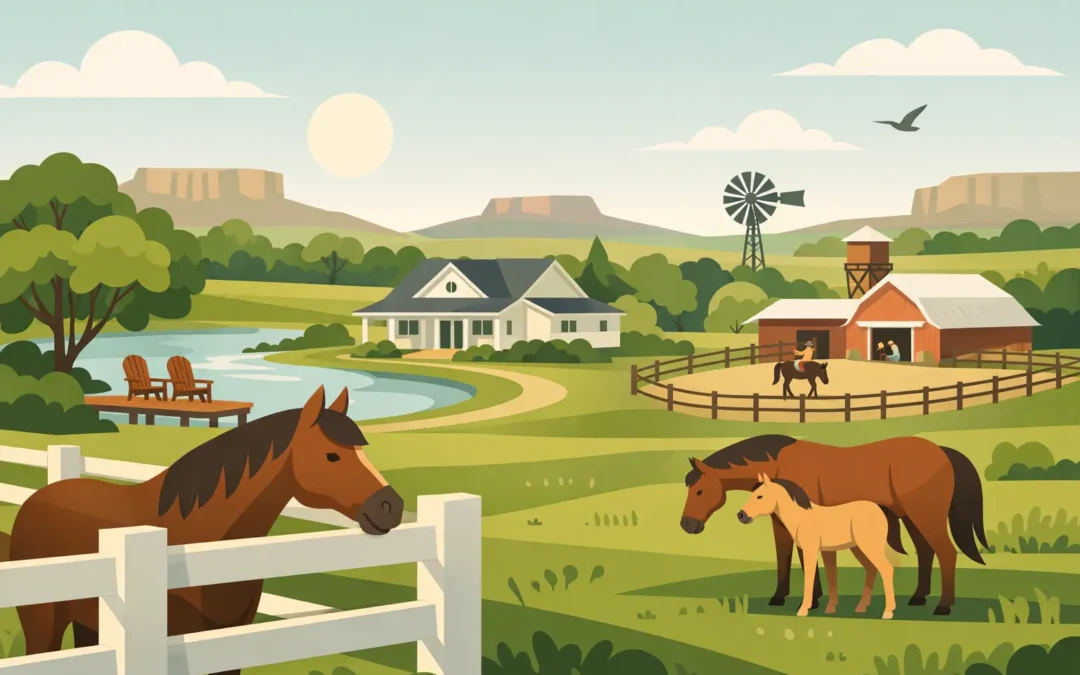
A pretty house on acreage can make a strong first impression, but horse people know the real test starts at the gate. Can you safely turn out horses? Is there dependable water in August? Will the arena still ride after a North Texas rain? The best features for horse properties are the ones that make daily care safer, easier, and more enjoyable for both horses and people.
A horse property does not need to have every improvement in place on day one. In fact, a clean piece of usable land with good access and a sound layout may be a better long-term fit than a heavily improved place with worn-out fences or poor drainage. The key is knowing which features support your goals now and leave room for the operation you want to build.
Start With Land That Works for Horses
Usable acreage matters more than the number on a listing. Ten open, well-drained acres can serve a small horse operation far better than 20 acres broken up by steep terrain, heavy brush, flood-prone ground, or an awkward shape.
Walk the property with your everyday routine in mind. Consider where horses will be turned out, where hay will be unloaded, how a trailer will enter and turn around, and how you will move from the house to the barn in rough weather. Look for level or gently rolling ground that gives you choices for pens, paddocks, an arena, and future improvements.
Soil and drainage deserve close attention in North Texas. Clay soils are common, and they can hold water long after a storm. A few muddy spots may be manageable, but consistent standing water around gates, barns, or turnout areas creates headaches and can affect hoof health. Good grading, natural drainage, and a firm base in high-traffic areas save a great deal of maintenance over time.
Floodplain location is another item to investigate before making an offer. Floodplain acreage is not always unusable, but it can limit where you place buildings, affect insurance requirements, and change how you plan the property.
Safe Fencing Is One of the Best Features for Horse Properties
Fencing is more than a boundary line. It is a daily safety system, and replacing it can become one of the biggest expenses after closing. Look for fencing that is visible, sturdy, and appropriate for horses.
Pipe fence is a popular choice around barns, lanes, and smaller pens because it is durable and holds up well to regular use. No-climb wire with a safe top rail can work well for larger pastures. Wood fencing has classic appeal, though it requires ongoing repair and painting. Electric fencing can be useful as a secondary barrier or to protect a fence line, but it should be installed thoughtfully and maintained consistently.
Be cautious with old barbed wire, sagging wire, broken boards, sharp corners, and gates that do not latch securely. Some buyers are comfortable budgeting for fencing upgrades, especially when the land, location, and home are otherwise right. Others need a property that is ready to bring horses home immediately. Neither approach is wrong, but the cost and labor should be clear before you move forward.
Paddock layout is worth considering, too. Separate turnout areas make it easier to rotate horses, isolate a new arrival, manage feeding, or rest a pasture. Gates placed where equipment can access each pasture will make mowing, dragging, and repairs far simpler.
Dependable Water and Power Come Before Extras
A beautiful barn cannot replace reliable water. Horses need steady access to clean water, and the property needs a system that still works when temperatures climb or a freeze moves through the area.
Ask whether the home and barn are served by a well, rural water meter, or both. If there is a well, learn its production history, the condition of the pump, and whether it supplies all structures and stock tanks. If the property uses rural water, confirm meter capacity and identify where lines run. Ponds can be useful for livestock and scenery, but they should not be the only water plan for horses.
Freeze-proof hydrants, water lines placed in practical locations, and quality stock tanks reduce the time spent carrying hoses across a pasture. In larger setups, a well-planned water system can also support rotational grazing and keep horses from wearing down one corner of the property.
Power is equally practical. Barn lights, fans, a well pump, security cameras, and trailer hookups all depend on it. Check for electrical service at the barn or shop rather than assuming it can be added inexpensively. The distance from the main meter, trenching needs, and panel capacity can change the scope of that project quickly.
A Functional Barn Beats a Fancy One
The right barn depends on how you use horses. A family with two retired geldings has different needs than a competitive roper hauling every weekend, a breeder managing foals, or a trainer keeping client horses. Still, a functional barn should offer safe stalls or shelters, good airflow, convenient storage, and enough space to work without feeling crowded.
In North Texas heat, ventilation is a priority. Look for tall ceilings, open sides where appropriate, windows, ridge vents, and fans. Stalls should be dry, well-lit, and free from exposed hardware or damaged lumber. A center aisle is helpful, but the aisle needs enough width for horses to pass safely and for equipment to move through.
Hay storage deserves its own space. Keeping hay protected from weather and away from electrical hazards is good practice, while a location close to the feeding area cuts down on daily chores. A tack room, wash rack, feed room, and equipment storage are valuable additions, but their usefulness comes down to layout. A barn that supports a smooth routine will serve you better than one with impressive features placed in inconvenient spots.
Do not overlook run-in sheds. For horses that live outside, a well-built shelter with dry footing and proper orientation can be more useful than stalls that sit empty. Its placement should provide shade and weather protection without trapping mud at the entrance.
Arena Footing, Space, and Access Matter to Competitors
For riders, ropers, and rodeo families, an arena can be the feature that turns acreage into a true home base. Start by looking at dimensions, drainage, fencing, lighting, and footing. A small arena may be enough for exercising horses and working on fundamentals, while a larger setup is better suited to barrels, team roping, calf roping, or regular practice with friends and family.
Good footing is not one-size-fits-all. The right mix depends on the discipline, local soil, maintenance plan, and budget. What matters is a consistent surface that drains well, does not become dangerously deep or hard, and can be maintained with the equipment available. Ask how the arena performs after rain and during dry stretches. If possible, visit after different weather conditions rather than judging it on one clear afternoon.
A return alley, cattle pens, roping boxes, chutes, and trailer parking may be essential for one buyer and unnecessary for another. If competitive rodeo is part of your life, think beyond the arena itself. You need room to park and turn a gooseneck, load horses safely, stage cattle if needed, and keep the activity separate from the home’s main living areas.
Home Access and Everyday Convenience Count
Horse property chores do not pause when groceries need to be carried in or kids need to get to school. The best property balances rural privacy with a location that supports your everyday life.
Evaluate road access, especially if you pull a horse trailer. Narrow entrances, low utility lines, tight turns, and soft driveways can make hauling frustrating. A solid all-weather driveway, a wide gate, and a practical turnaround area are features you will appreciate every time you leave for a jackpot, vet appointment, or supply run.
The home itself should fit the people who will live there. A mudroom, laundry area, covered parking, outdoor lighting, and space for boots and tack can make ranch life more comfortable. Internet and cell service are also worth verifying, particularly for buyers who work remotely or run a business from the property.
Buy for the Routine You Actually Have
It is easy to get caught up in a big barn, a picturesque pond, or a new arena. Those features can be worthwhile, but they should not distract from the basics: safe land, water, fencing, drainage, access, and a layout that supports your horses.
Before touring properties, write down what is non-negotiable, what can be added later, and what you are not willing to repair. That short exercise brings clarity to every showing. South Gate Realty can help North Texas buyers look past the listing photos, ask the right property-specific questions, and find a place where horses, family, and long-term plans all have room to settle in.