
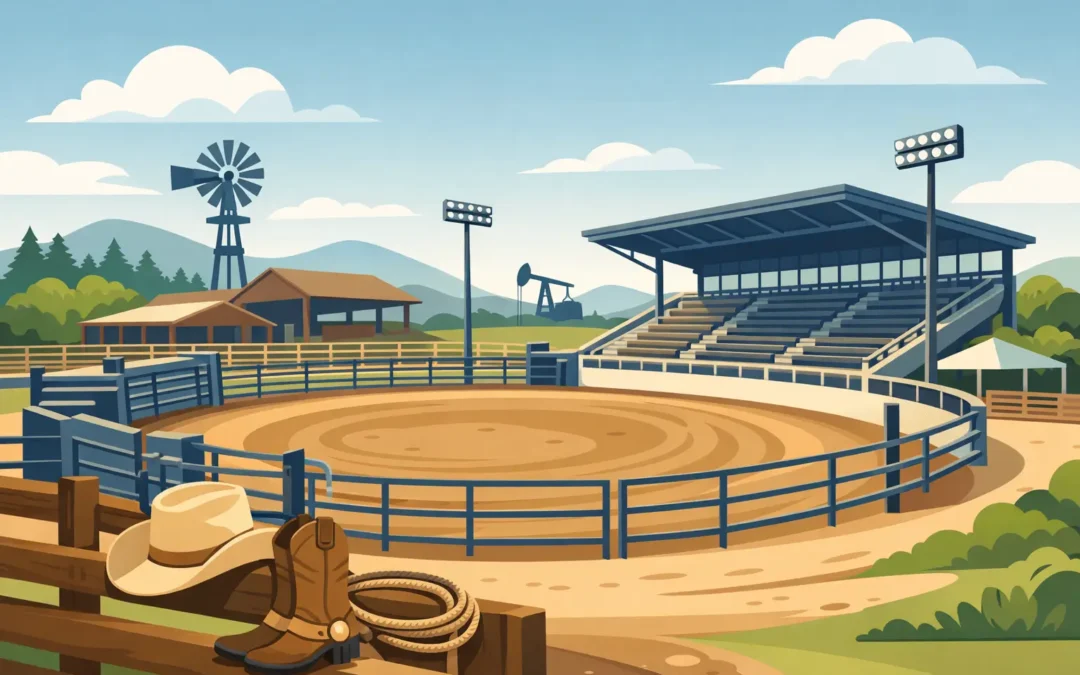
A pretty arena can catch your eye from the road. A functional one earns its keep every day, whether you are tuning horses, practicing for the next jackpot, hosting a family gathering, or keeping cattle moving safely. The best rodeo arena features are not always the flashiest upgrades. They are the practical details that make the property safer, easier to maintain, and better suited to the way you actually live and compete.
For North Texas buyers, the right arena setup depends on your events, your livestock, your acreage, and how much time you want to spend maintaining the facility. A rope horse trainer, a family with youth competitors, and a producer hosting regular events may all need different things from the same piece of ground.
Start With Arena Location and Layout
Before looking at panels, chutes, or lights, look at where the arena sits. An arena should have room around it for trucks, trailers, warm-up space, spectators, and livestock movement. On a smaller property, poor placement can make an otherwise useful arena feel cramped from the first trailer load.
Access matters as much as the arena itself. A wide, all-weather drive gives trucks and trailers a clear route without crossing through the home site, pasture gates, or soft ground. If friends, students, or competitors will regularly visit, separate parking can keep the place orderly and protect the driveway near the house.
The arena’s orientation also deserves attention. Sun in a rider’s or roper’s eyes is more than an inconvenience. It can affect visibility and safety at certain times of day. Wind, drainage patterns, nearby trees, and the location of pens should all be considered before assuming an arena can simply be moved or expanded later.
Make Room for the Work Around the Arena
The competition space is only one piece of the setup. A practical rodeo property often needs an alley for cattle movement, holding pens, a catch pen, a return alley, and enough clearance to work gates safely. For timed-event riders, the path from the barns or pens to the arena should be straightforward, with as few tight turns and bottlenecks as possible.
A well-designed layout saves steps when chores need to get done before daylight or after a long weekend on the road. It also makes the property more usable for a future buyer, even if that buyer competes in a different event than you do.
The Best Rodeo Arena Features Begin With Good Footing
Footing is one of the most valuable and most overlooked parts of any arena. It affects the safety and confidence of horses, the consistency of practice, dust control, and the amount of maintenance required. An arena with deep, uneven, or poorly drained footing can turn a promising facility into a constant project.
There is no single perfect surface for every discipline. Barrel racers may prefer a different feel than team ropers, cutters, reiners, or ranch versatility riders. What matters is a well-built base, suitable top material, proper depth, and a way to maintain the surface consistently.
Ask how the arena is dragged, how often water is applied, and whether the base holds up after rain. In North Texas, weather can shift quickly from dry, dusty conditions to heavy rain. A surface that rides well only under ideal conditions may not be the best choice for a working family or active competitor.
An indoor arena can reduce weather interruptions, but it comes with its own trade-offs. Buyers should check the height, ventilation, lighting, footing condition, building maintenance, and whether equipment can easily enter to work the ground. An outdoor arena may offer more room for expansion and lower upfront cost, but it needs dependable drainage and dust management.
Look Closely at Lighting, Power, and Water
Good lighting stretches the usefulness of an arena far beyond daylight hours. This is especially valuable for families balancing school, work, feeding schedules, and practice time. The goal is even coverage across the full working area, not a few bright spots that leave shadows around the boxes, alleys, or far end of the arena.
When viewing a property, ask where the electrical service is located and whether the existing system can support arena lights, barn use, a water well, and possible future additions. Upgrading power can be expensive, particularly when lines must be run across acreage.
Water deserves the same attention. A reliable source near the arena makes footing maintenance easier and supports livestock needs. A property with a well, rural water connection, or storage system may offer more flexibility, but buyers should understand capacity, condition, and any restrictions before relying on it for regular arena watering.
Drainage Is Not a Small Detail
Standing water near gates, pens, and the arena entrance creates mud, ruts, and headaches. More seriously, it can make livestock handling and trailer access unsafe. Look for grading that directs water away from the arena, barns, and home site without sending runoff into neighboring property.
After a rain is one of the best times to inspect a rodeo property. You can see where water settles, whether roads stay passable, and how the footing responds. If a property is being considered during a dry stretch, ask direct questions about drainage history and request details about any improvements already made.
Safe Livestock Flow Adds Real Value
Pens, alleys, gates, and chutes should make cattle handling calmer and more efficient. That does not mean every buyer needs a large commercial setup. It means the system should match the way you plan to use it.
A family practicing team roping may need secure holding pens, a dependable alley, and a safe cattle release system. Someone who hosts ropings or schools may need larger sorting areas, more parking, and a layout that separates livestock traffic from spectators. Buyers with ranch operations may place greater value on working pens that serve both the arena and daily cattle work.
Inspect fencing and gates closely. Look for sturdy construction, secure latches, sensible gate swing, and places where a horse or cow could get caught. Panels that are bent, loose, or poorly anchored can be repaired, but the condition of the whole system helps reveal how the property has been maintained.
Do Not Overlook Barns, Storage, and Trailer Space
A rodeo arena is more useful when the support facilities are in place. Covered stalls, turnouts, hay storage, a tack room, wash rack, and equipment storage can make a major difference in daily operation. Even a modest barn can work well if it is clean, well-drained, conveniently placed, and built around your horse and livestock needs.
Storage is especially important on an active place. Drags, tractors, panels, feed, shavings, saddles, and trailer supplies need a home. When these items are left exposed or scattered around the property, maintenance becomes harder and the acreage can quickly feel smaller than it is.
Trailer parking should be level, accessible, and large enough for the rigs you use now and may use later. If you haul regularly, consider turning radius at gates, clearance around barns, and whether the road surface holds up after rain. A beautiful entrance does not help much if the trailer cannot comfortably reach the arena.
Choose Features That Fit Your Actual Goals
When comparing properties, it helps to separate must-haves from nice-to-haves. A covered roping chute, an announcer stand, pipe fencing, and a full set of working pens can be valuable features, but only if they support your plans. The same is true of an oversized indoor arena that adds purchase price and maintenance without fitting your routine.
Think about how the property will serve you over the next several years. Will children need room to learn? Will you give lessons, keep outside horses, host small practices, or simply want a dependable place to ride after work? Is the arena a central part of your livelihood, or a feature that supports a rural family lifestyle?
Those answers help clarify where to prioritize budget. It is often wiser to buy a property with good land, access, drainage, and room to improve than one with expensive arena extras built in the wrong location. On the other hand, a well-planned, ready-to-use facility can save significant time and construction cost when it truly matches your needs.
A Property Review Should Go Beyond the Arena Fence
The best rodeo arena features work together with the full property. Evaluate acreage shape, fencing, soil, roads, utilities, restrictions, neighboring uses, and the condition of the home alongside the facility itself. A strong arena cannot overcome a difficult access road, inadequate water, or a layout that leaves no room for turnout and expansion.
For sellers, clear details about footing, dimensions, lighting, water access, pens, barns, and recent improvements help qualified buyers understand the value of the property. For buyers, a careful walk-through with someone who understands both rural real estate and rodeo use can prevent costly assumptions.
The right arena should make it easier to spend time with your horses, sharpen your skills, and enjoy the place you worked hard to own. South Gate Realty can help you look past the first impression and focus on the features that make a North Texas rodeo property work for the long haul.